Purchasing Transformation + BOSS Mobile
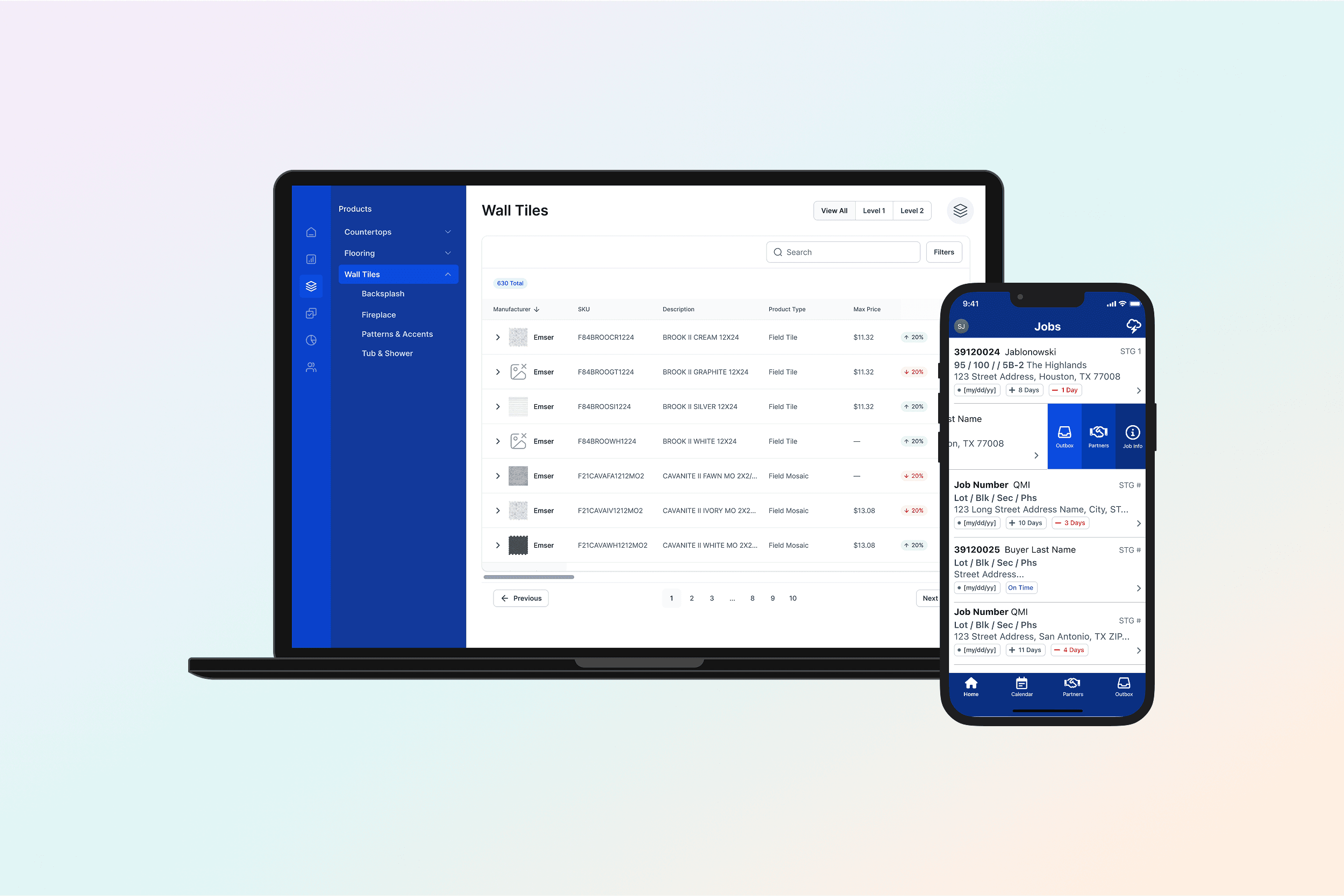
We transformed a decades-old JD Edwards purchasing pipeline into a dual-surface enterprise ecosystem:
A structured, efficient desktop interface for Purchasing Ops
BOSS Mobile — a field-optimized, offline-first companion
This eliminated paper binders, text-message approvals, and tribal knowledge, while reducing vendor confusion, strengthening accountability, and giving builders real-time clarity during job walks.
Timeline:
-
Role:
Lead UX Designer
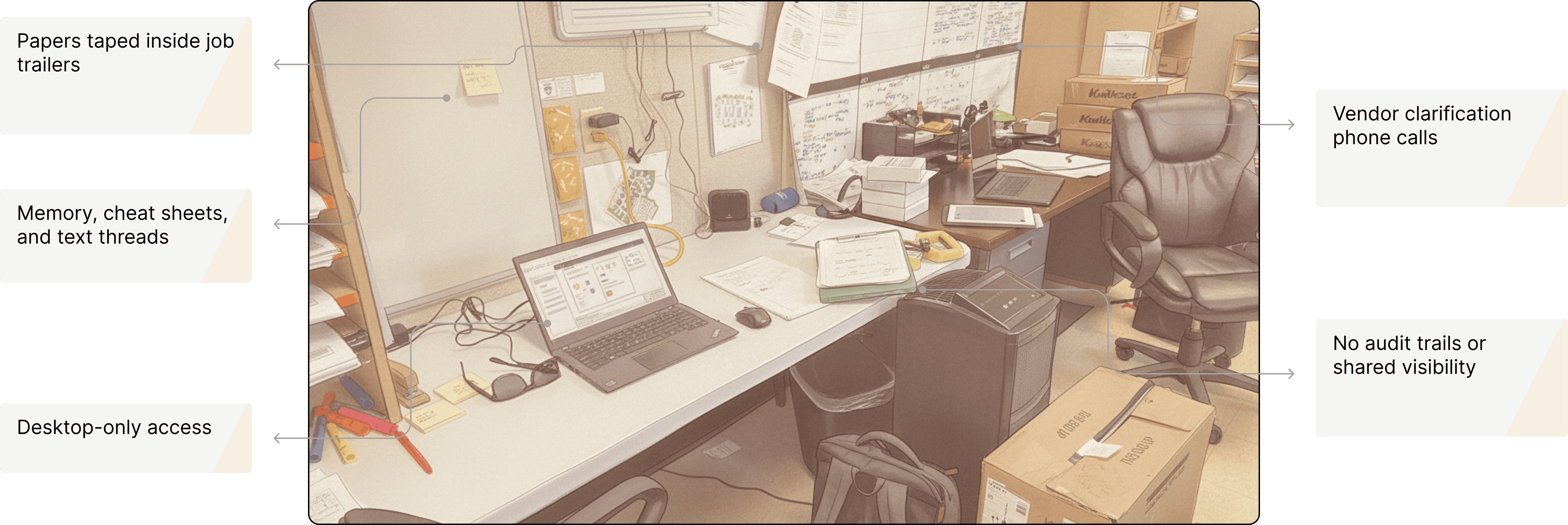
Before the redesign, critical workflows lived inside a legacy JDE interface built for a 1990s back-office reality. Field teams relied on:
Paper binders taped inside job trailers
Memory, cheat sheets, and text threads
Vendor clarification phone calls
Desktop-only access
When anything slipped, schedules slipped — costing time, trust, and money.
The construction workforce had evolved. Their tools had not.
Field superintendents don’t work in offices. They operate outdoors, mid-task, in conditions that actively resist traditional UX assumptions. They review deliveries:
With gloves on
On ladders
With constant interruptions
With spotty or no signal
In dust, glare, and changing weather
The Purchasing Ops team, meanwhile, spent hours managing purchase orders in a JDE system that had no batch actions, no inline editing, and no visual hierarchy to speak of. Errors were caught by memory, not by design.
THE REFRAME: Design for how builders actually work — not for legacy constraints or nostalgia.
The system had shaped itself around the software’s limitations. Our job was to invert that. Field reality — gloves, interruptions, disconnected signal — had to become the primary design constraint, not an edge case. Desktop workflows had to serve the people doing the work, not the ERP that predated them.

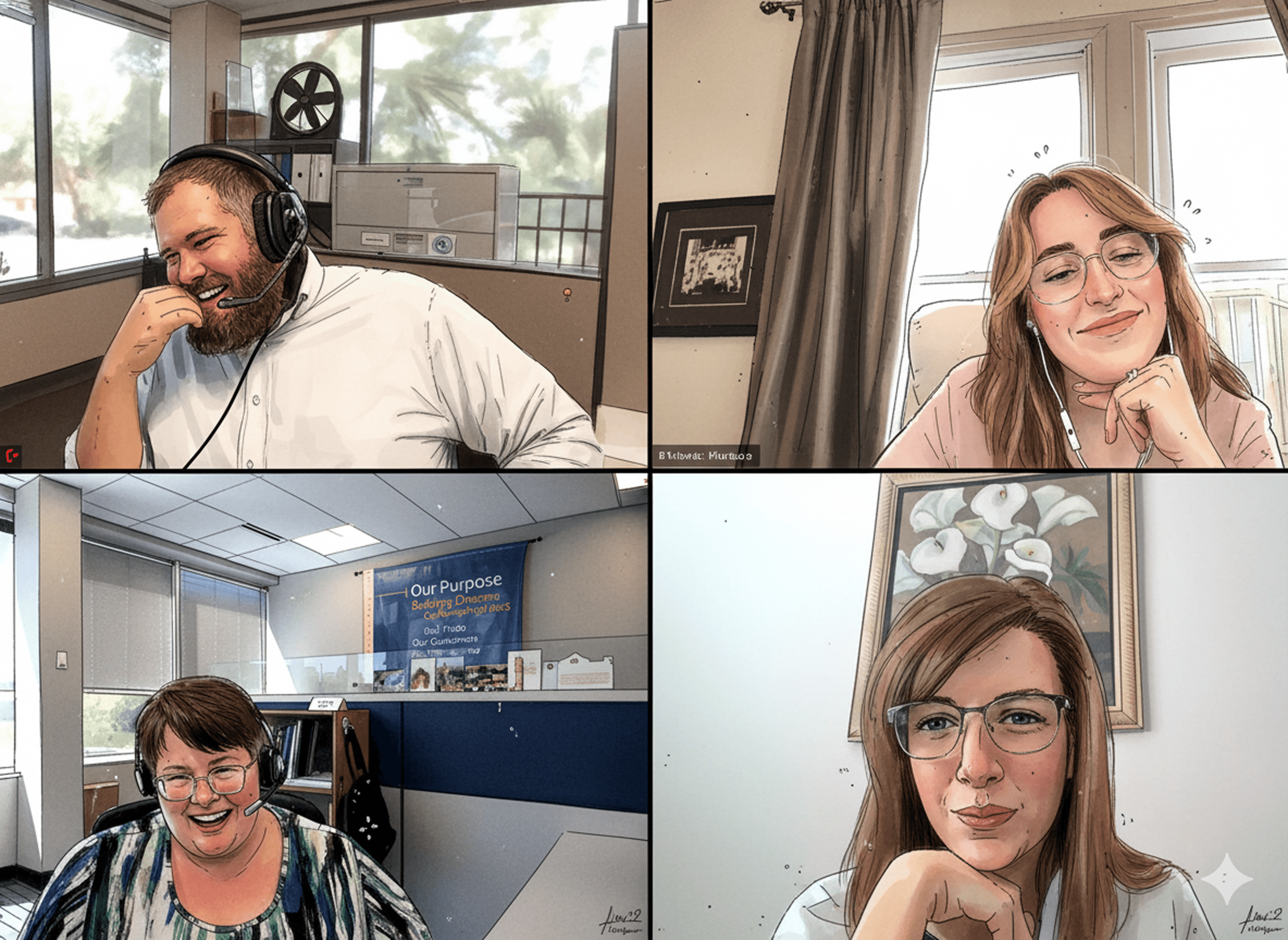
We used a hybrid ethnographic + participatory approach to surface the real constraints of field work — not just what users said they did, but what they actually did when the system wasn’t watching.
01.
Contextual Inquiry
“Show me where you check this today.”
Exposed offloading tools (binders, notes, screenshots) and hidden rules.
02.
Mental Model Mapping
Card sorting revealed mismatches between the existing JDE structure and how users naturally organized and understood the work.

03.
Key User Group Sessions
Biweekly live sessions served as a standing feedback forum, allowing us to test assumptions, review concepts, and iterate quickly with real users.
04.
Inline Feedback Tool (Rolled Out During Pilot)
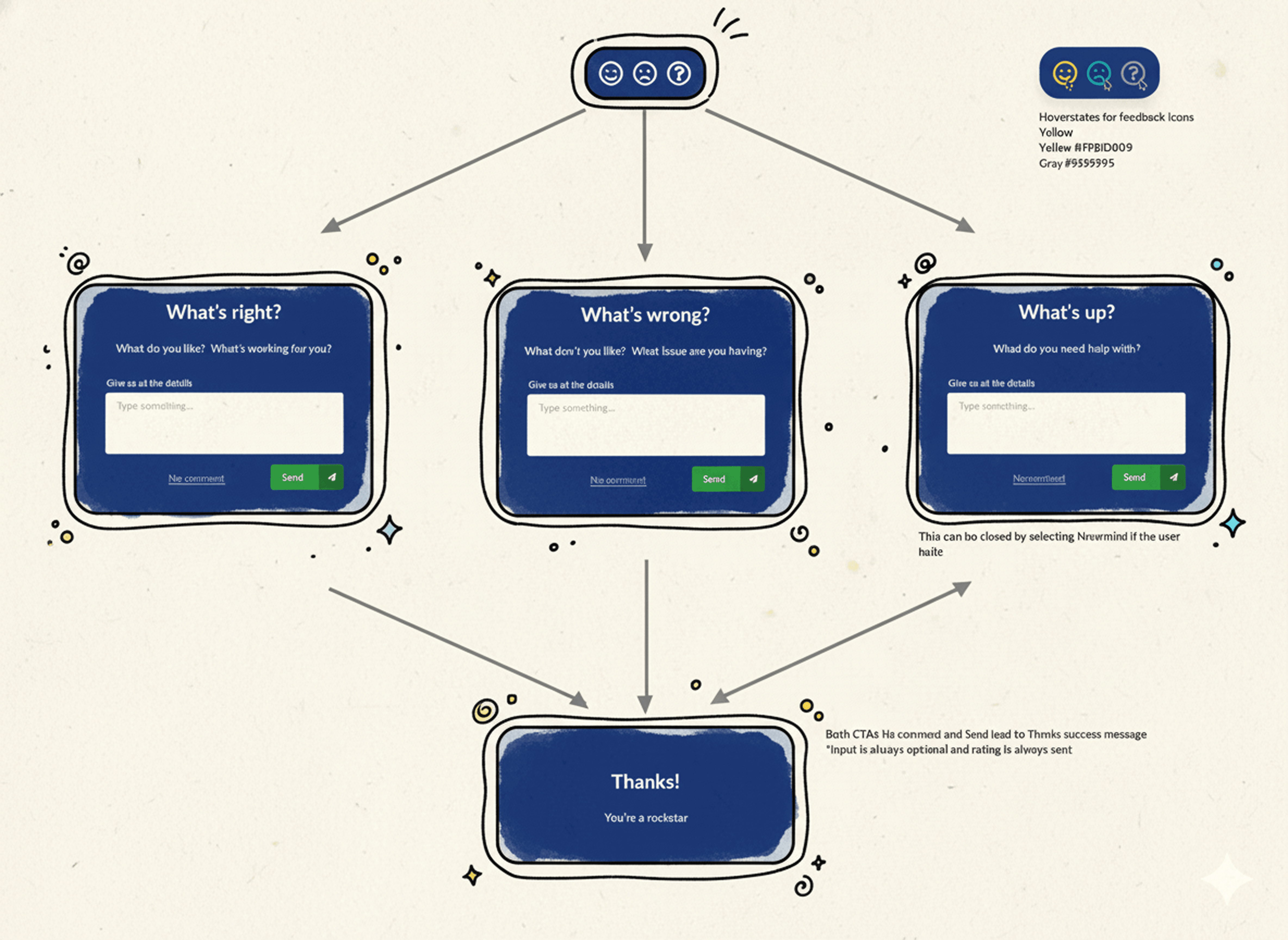
A lightweight thumbs-up/down mechanism (binary + optional comment) captured friction in the moment, informing rapid iteration.
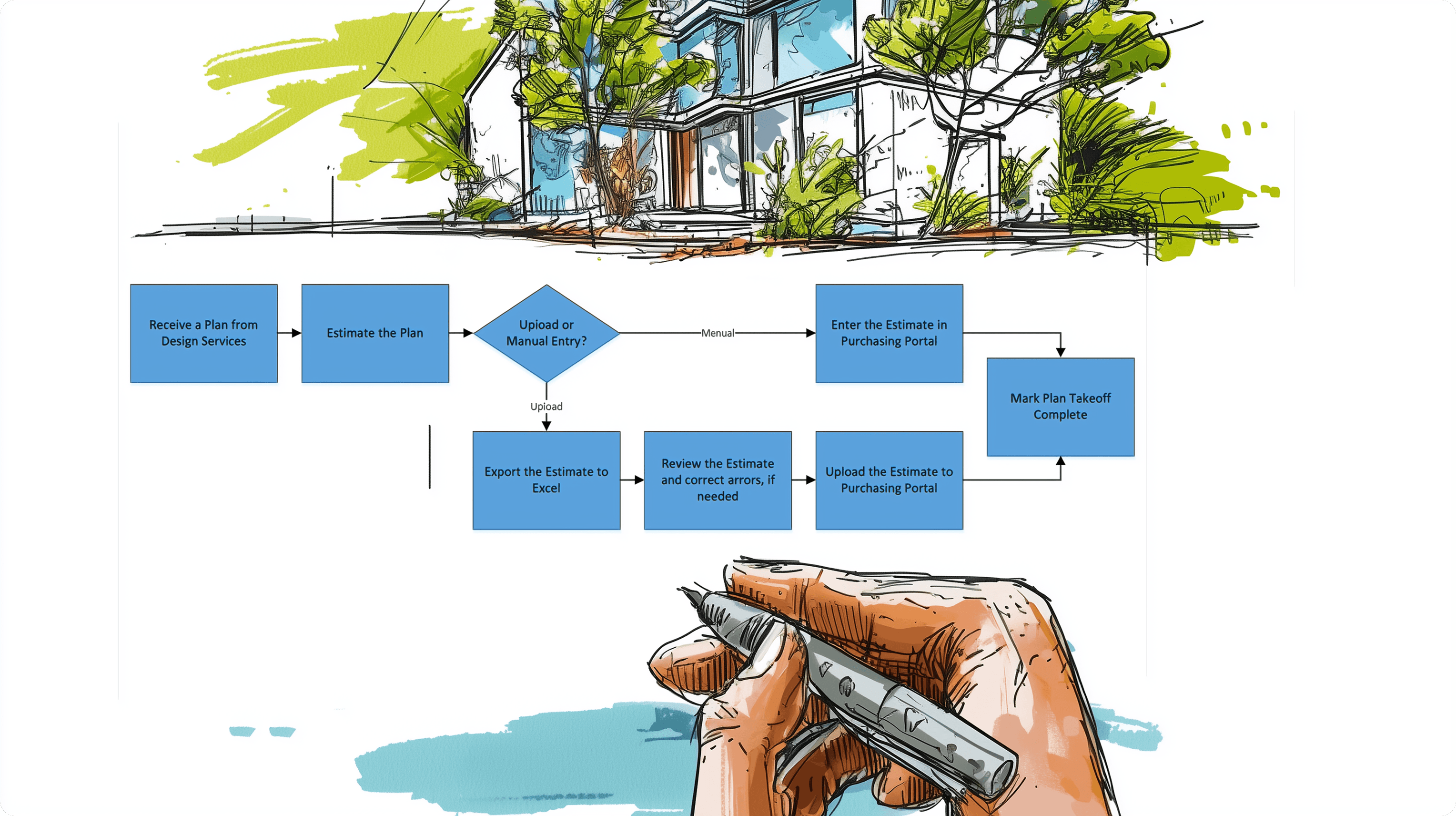
Before designing a single screen, we mapped the end-to-end purchasing lifecycle across teams—from initial request through approval, delivery, confirmation, and close—to understand where work slowed, stalled, or quietly broke down.
What surfaced wasn’t just inefficiency, but a lack of defined ownership. Handoffs blurred, escalation paths lived in tribal knowledge, and even core states like “approved” varied by role. Purchasing Ops expected the field to confirm deliveries, but that responsibility wasn’t explicitly defined or enforced. The field didn’t consistently see it as theirs, and vendors operated without a reliable confirmation signal.
By making these gaps visible, we established clear ownership at each stage of the lifecycle—most critically, assigning delivery confirmation to the field as a required system action rather than an assumed task.
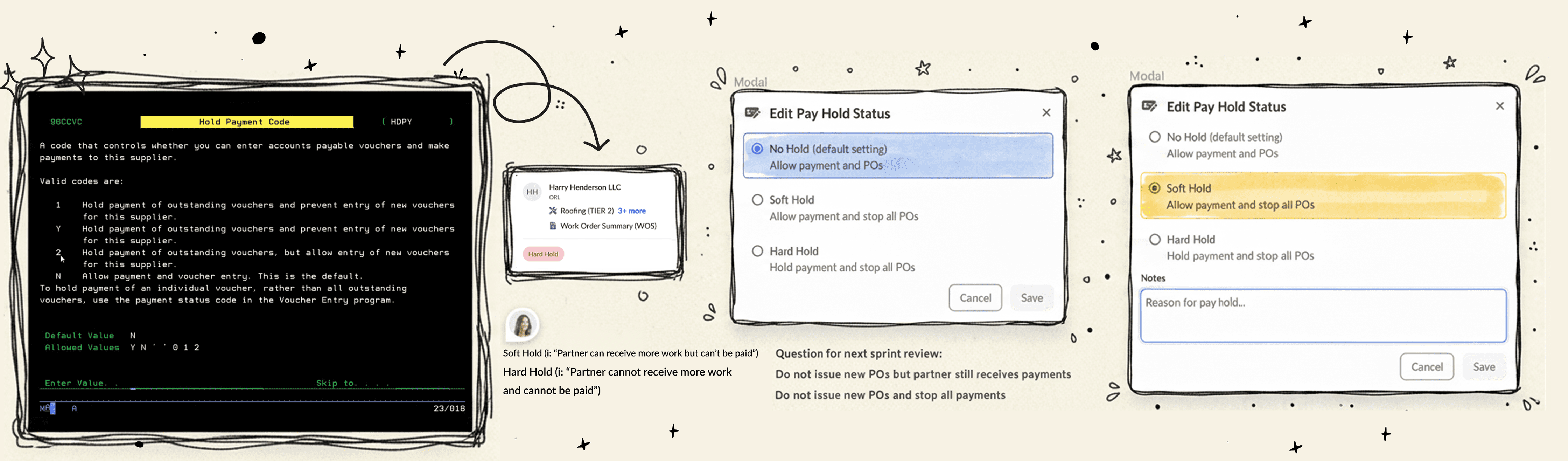
This alignment across Purchasing Ops, Field Supervisors, Vendors, and Accounts Payable became the foundation of the Builder Hub architecture: organizing the experience around task ownership, frequency, and approval state rather than JDE’s legacy data model. Bottlenecks diminished, accountability became explicit, and guesswork shifted from an accepted norm to a detectable system failure.
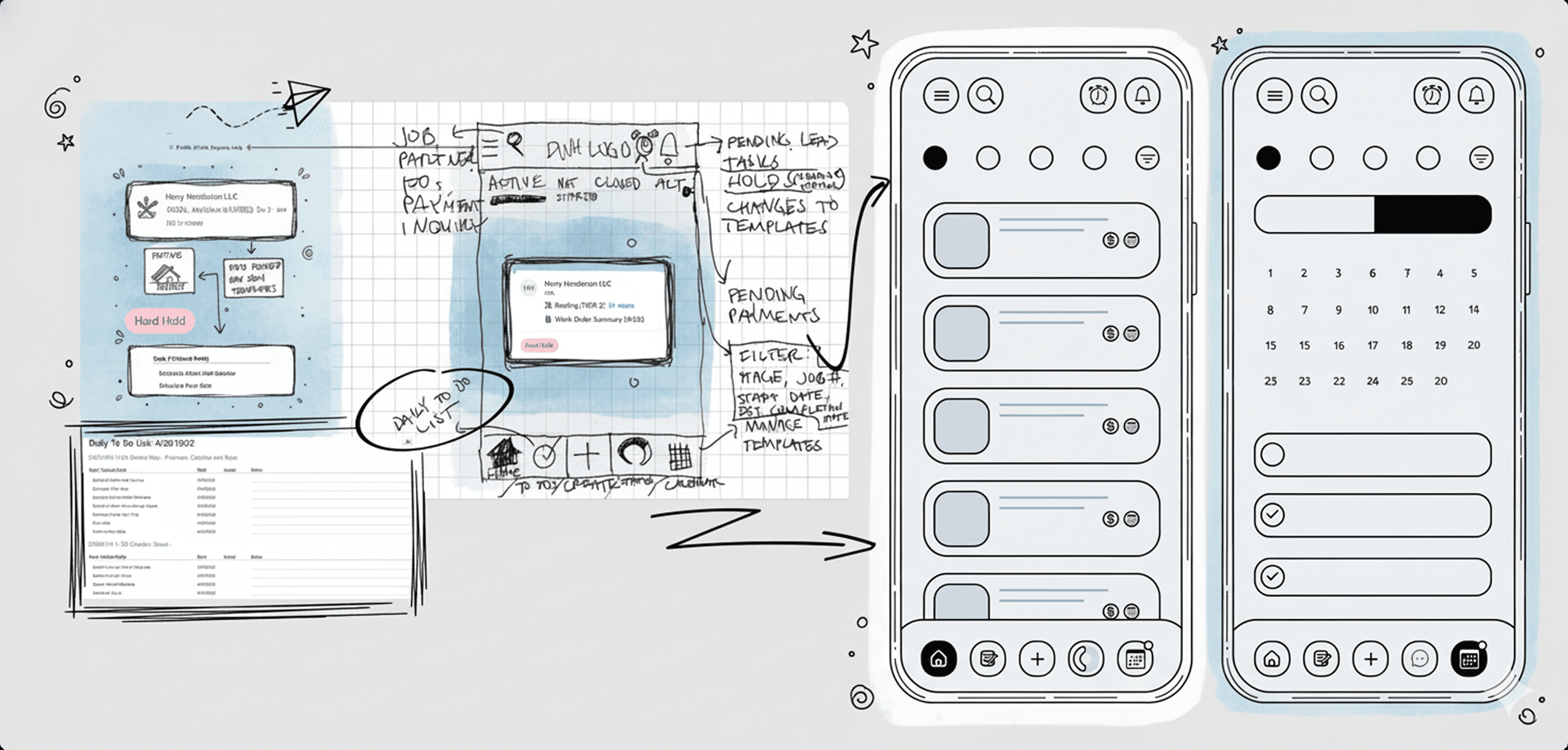
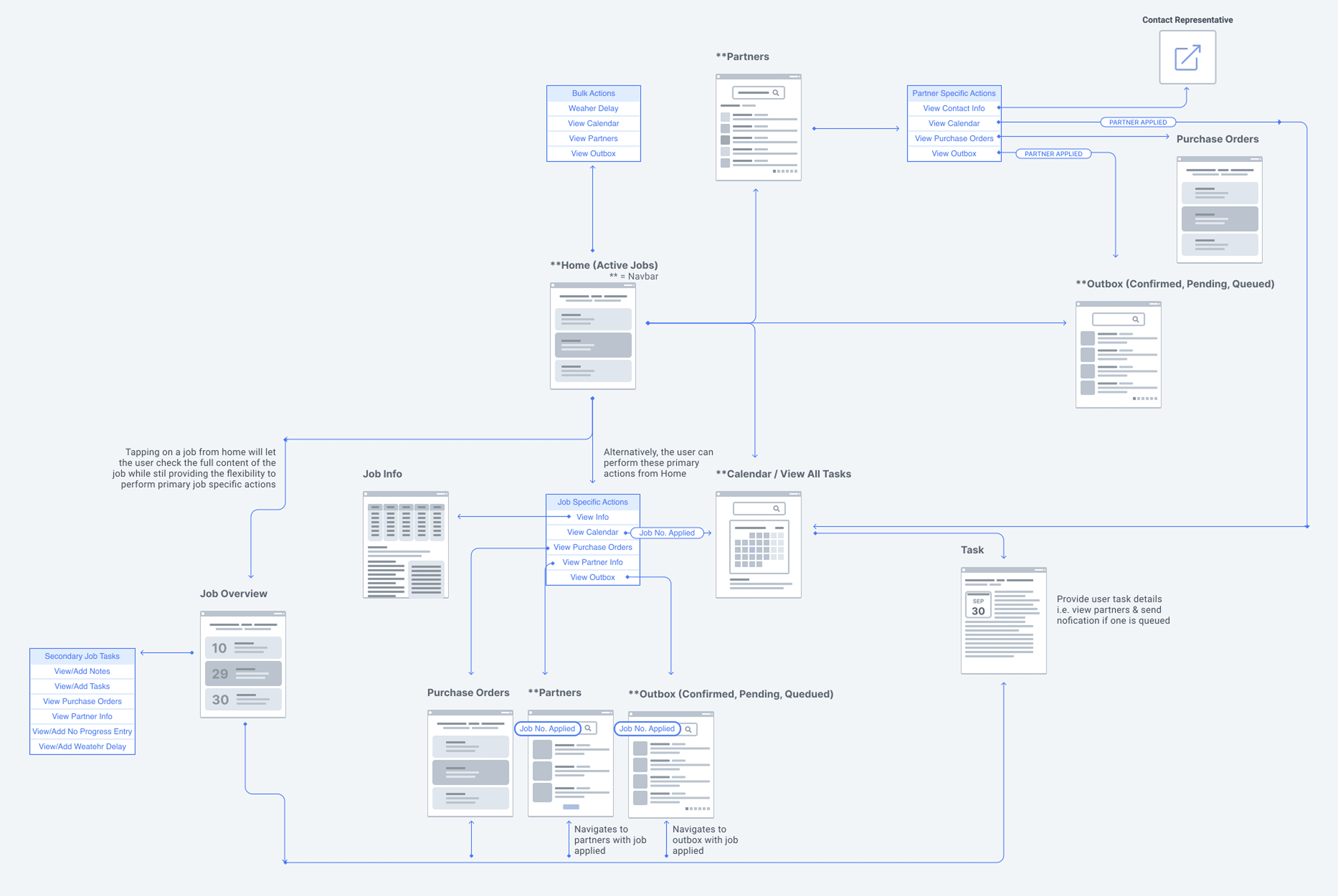
After defining the architecture, we shifted focus to the field, where purchasing decisions actually collide with real construction work. Builders were reviewing deliveries mid-job walk, approving changes with gloves on, and moving between physical and digital tasks in genuinely unpredictable environments. The mobile experience had to succeed in conditions that actively work against traditional UX patterns.
Design constraints in the field
Gloves, bright sunlight, dust, and debris
One-handed use while walking active job sites
Unreliable or nonexistent connectivity
Constant context switching between physical and digital tasks
UX responses
High-contrast UI to remain legible outdoors
Large tap targets designed for gloved interaction
Minimal navigation depth to reduce cognitive load
Persistent offline caching to support disconnected work
Predictable re-entry points so users could resume instantly without losing state
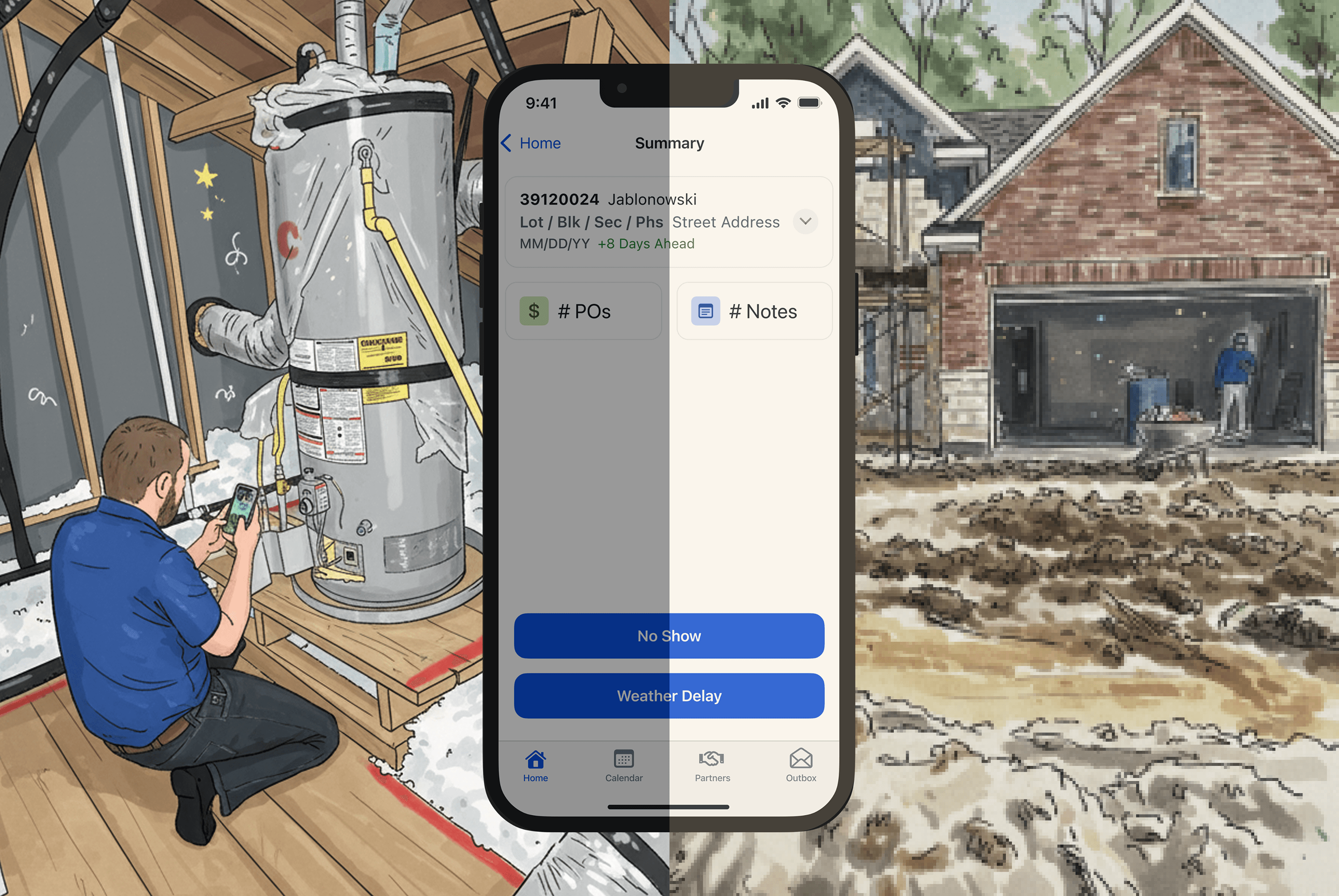
In dark attics + bright sunlight
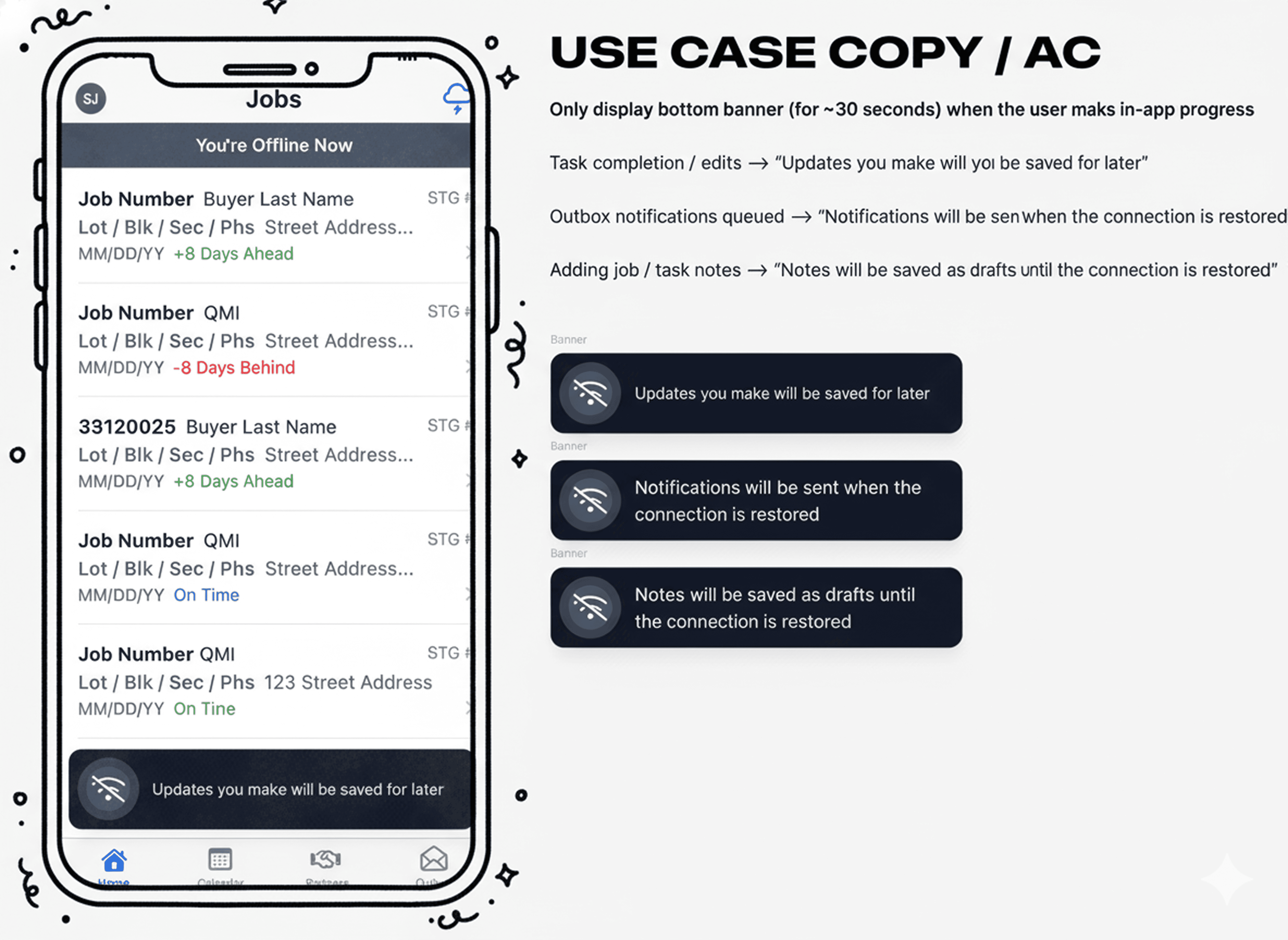
Offline wasn’t “nice to have.” It was the backbone of trust.
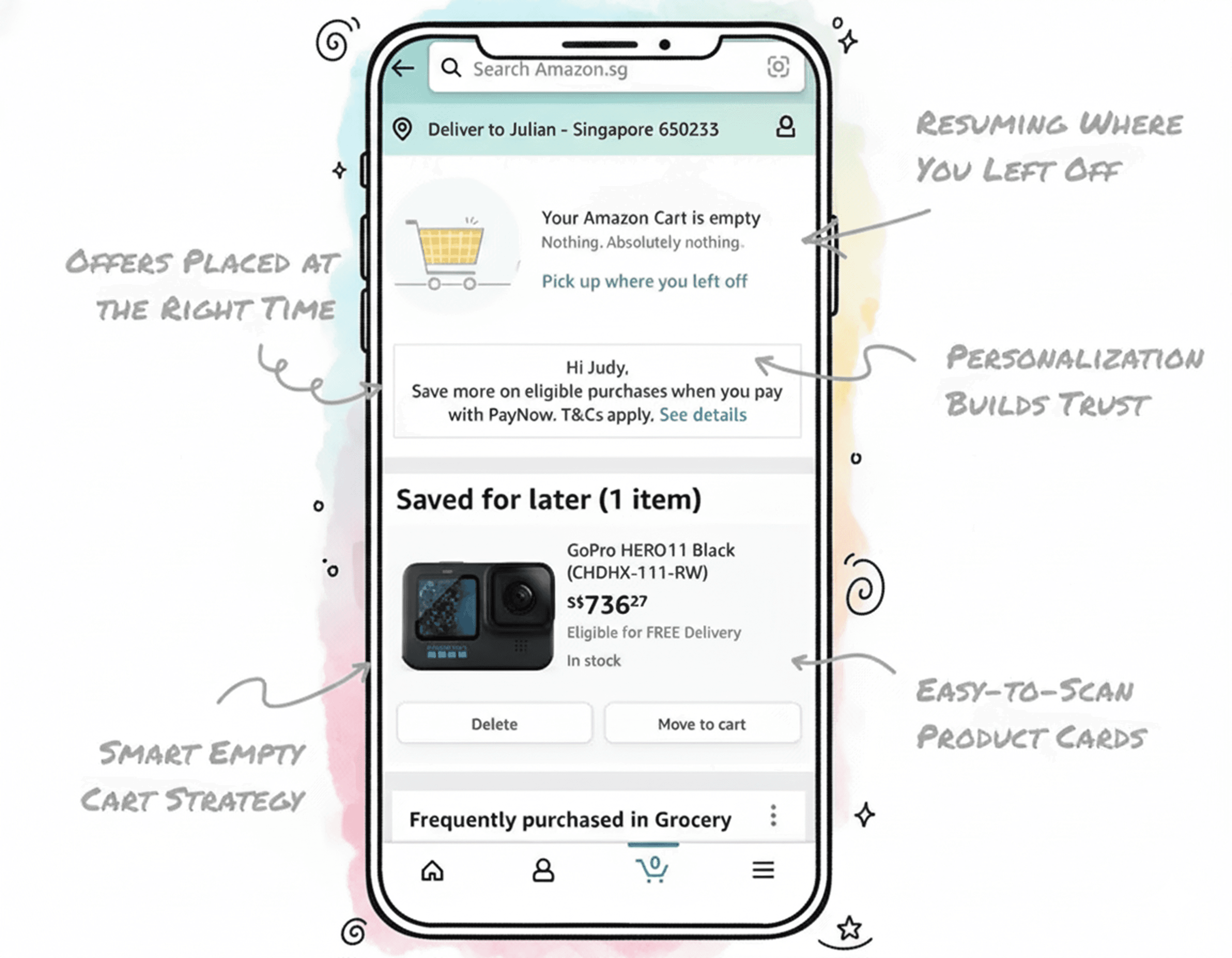
To modernize procurement UX, I looked deliberately at consumer and adjacent B2B products that had already solved the problems we were facing.
Amazon, ASOS, Shopify → staged decision logic and progressive disclosure
Smartsheet, Zoho → metadata grouping and row-level status clarity
Vendor portals → escalation patterns and confirmation flows
Borrowing these patterns allowed us to reuse proven mental models, standardize status clarity, improve scannability and predictability, and significantly reduce cognitive load. The result: builders grasped familiar interaction patterns within sessions — patterns that had never existed for DWH users before.
The dual-surface system served two completely different user realities from one shared data backbone.
Desktop: Purchasing Ops
Grouped, scannable tables with visual hierarchy by vendor, status, and urgency
Inline editing to reduce round-trips to detail views
Batch actions for approvals, rejections, and status updates
Vendor context and pricing surfaced at the decision point
Accessible components meeting enterprise standards
Predictable keyboard shortcuts for power users
BOSS Mobile: Field
Approvals, confirmations, and checklists designed for one-handed, gloved use
Blocker flows, and the delivery state surfaced at the top of the workflow
Offline-first reliability with persistent caching across sessions
Clear timestamps and lifecycle states to reduce “where are we?” questions
High-contrast ergonomics for outdoor legibility in direct sunlight
And no — I didn’t name it after myself.
BOSS = Builder Operating Scheduling System.
Made for a great icebreaker, though. 😅

This project was measured in behavior change and system trust — not A/B test uplift. The metrics below reflect what happens when a procurement system finally matches the reality of the people who use it.
Adoption & Behavior Change Metrics
Notification reminders sent
22%
22%
Confirmation Reminders Sent
30%
30%
using custom templates
86%
86%
using partner favorites
53%
53%
send rates in a single quarter → Rapid adoption and high trust in the new system
84%
84%
The system created its own accountability
Before the redesign, missed confirmations disappeared into silence — nobody knew who was responsible. After launch, the system surfaced gaps as explicit states: blocked, pending, and escalated. Users didn’t need to remember to follow up. The workflow made the right action obvious.
Workarounds stopped accumulating
The most telling sign of trust isn’t adoption metrics — it’s the gradual disappearance of workarounds. Paper binders, text thread approvals, and vendor phone calls didn’t fade because we asked people to stop using them. They faded because the system finally did what those workarounds were trying to do.
TL;DR
We measured adoption as behavior change, not activity—whether users trusted the system enough to run real work through it. Within a single quarter, the signal was unmistakable: most users acted without reminders (only 22% of notifications sent), the system stepped in selectively rather than constantly (30% confirmation prompts), and behavior shifted toward structure—86% using custom templates and 53% adopting partner favorites. Overall send rates reached 84%, pointing to rapid uptake and sustained trust. These aren’t vanity metrics. They reflect a move from reactive triage to proactive, predictable workflows. As reliability held, shadow workarounds fell away. Teams aligned faster, vendors received clearer communication, and leadership gained consistent, dependable visibility.
"The new Create & Duplicate flow let me stay in the system all morning without getting kicked out. It finally supports how we actually work."
Ann Podolske
Options Specialist, Purchasing
"We were able to add requirements immediately, before any formal documentation was ready. That alone changed how fast the team could move."
Ray Flores
Training Coordinator, Construction
Small reliability improvements translated into big trust wins.
Time is a first-class object.
Interruptions are the workflow. Effective design must support pausing, resuming, and seamless re-entry without loss of progress or context.
Offline isn’t an edge case.
If the system breaks when connectivity drops, trust breaks. Reliability equals usability. In construction environments, 100% uptime is never the baseline. The design has to be honest about what it knows, hold its state, and resume cleanly.
Tribal knowledge must be externalized.
Lifecycle modeling surfaces hidden rules and informal workarounds, turning them into scalable, governable systems the whole organization can rely on. Every “everyone just knows that” is a design debt waiting to surface as a system failure. By externalizing these patterns into structured digital workflows, organizations move from fragile tribal knowledge to resilient systems. Paper binders, cheat sheets, and approval chains buried in text threads give way to transparent, repeatable processes that anyone can follow—and trust.
Micro-systems create macro trust.
Autosave, shortcuts, inline feedback, persistent sessions—these quiet details compound into a feeling that the system is on the user’s side.
Adoption doesn’t hinge on headline features. It grows in the negative space—where friction is absent, interruptions are rare, and the product simply keeps its promises, day after day.
We modernized a legacy JDE purchasing ecosystem into a dual-surface platform built for real-world construction — blending structured desktop workflows with offline-first field execution. The result: reduced vendor confusion, stronger accountability, fewer bottlenecks, and a procurement system that finally meets the demands of modern homebuilding.
Before & After/End State: Operational Clarity